
Reviews 

After a serious fire pit accident, emergency medical treatment comes first. But once the immediate emergency is under control, preserving the fire pit, fuel container and surrounding evidence can become critical to determining what happened.
A sudden fireball may involve a difficult-to-see alcohol flame, flashback, flame jetting, spilled burning fuel, a pool fire or another mechanism. Investigators may need the actual products to determine where ignition began, how flame traveled and whether the fire pit, fuel container or both contributed to the accident.
Do not clean, refill, test, dismantle, repair, return, destroy or dispose of the fire pit or fuel container after a serious injury until evidence-preservation issues have been addressed. A product that looks burned, empty, broken or useless may contain evidence that cannot be recreated once it is altered or discarded.
The fire pit itself can provide information about product identity, design, fuel containment, stability, burner configuration and the condition of components after the accident. Whenever reasonably possible, preserve the entire unit rather than selecting only the parts that appear important.
Physical evidence can include:
Avoid cleaning soot, residue or spilled material from the product merely to make it easier to photograph or store. The post-accident condition may itself provide information. If a component separated during the accident, preserve it with the rest of the product rather than attempting to reinstall it.
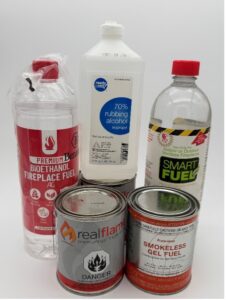 In a refueling accident, the fuel container may become one of the most important pieces of physical evidence.
Exhibit 34: Exemplar Fire Pit Alcohol and Ethanol Fuel Containers
Preserve the original bottle even if it appears empty, scorched or undamaged. The container can contain evidence concerning the fuel, opening, nozzle, dispensing system, cap, internal components, warnings and manufacturer.
Detailed fire pit fuel and container identification may require examination of:
Do not pour remaining fuel into another container merely for convenience. Transferring the liquid can separate the fuel from the container involved in the accident and alter evidence.
Preserving a damaged fire pot or fuel bottle is only the beginning. Evidence may need to be documented, secured and examined without altering its condition. Fire pit injury litigation attorneys can help address preservation requests, third-party custody and appropriate technical examination before critical physical or digital evidence disappears.
Once the area is safe
After a fire pit accident, someone may understandably want to know whether the event can be reproduced. That can lead to attempts to refill the product, ignite it again or test the fuel bottle.
IMPORTANT: Do NOT attempt a home re-creation of the fire pit explosion.
A suspected flashback or flame-jetting event can involve flammable vapor and rapidly projected burning fuel. Testing can create another serious injury and can change the condition of the products before they are properly examined. Detailed flashback toward the fuel container and outward flame-jetting accidents should be investigated from preserved evidence, witness information and appropriate technical analysis rather than an informal reenactment. Photograph the products in their existing condition instead of trying to demonstrate how the accident occurred.
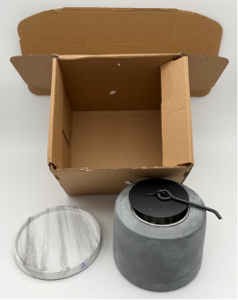 The original packaging can be far more important than it appears.
Exhibit: 26 Empty Fire Pit box with no instructions or warnings
A fire pit may contain limited identifying information on the unit itself while the original box identifies the brand, importer, distributor, model, SKU or UPC. Instructions and inserts can also establish what warnings were provided and how consumers were told to extinguish or refuel the product.
Preserve:
Do not assume that information printed only on packaging is unimportant. One question after an accident may be whether a warning was permanently affixed to the fire pit, contained only in the manual or box, or actually received by the consumer.
Photographs can preserve conditions that may later change during transportation, storage or examination.
When possible, photograph:
Wide photographs can document the overall scene while close-up photographs preserve product details. Do not dismantle the fire pit merely to obtain a better photograph of an internal component.
Cellphone video, home-security footage, restaurant or hotel cameras and other recordings can provide evidence about how an accident developed. Video can help establish where people were positioned, whether the fire appeared extinguished, who was refueling, the direction flame traveled and what happened immediately afterward.
Potential digital evidence can include:
Surveillance systems may overwrite recordings automatically. Identifying and preserving available footage can therefore be time-sensitive. Witness names, telephone numbers and email addresses should also be preserved when possible.
Online product information can disappear even when the physical fire pit remains available. A listing may be revised, removed or replaced. A third-party seller can change names or close an account. Product photographs, warning language and descriptions can change.
Preserve available:
Detailed online seller and retailer liability can depend on the transaction and applicable law. These records can also help identify a manufacturer, importer or seller when the fire pit itself has limited markings. If the fire pit was purchased used through Craigslist, eBay, Facebook Marketplace or another resale channel, preserve the listing and communications with the seller before they disappear.
A CPSC recall or safety warning may instruct consumers generally to stop using, return, destroy or dispose of a product. Those instructions serve an important consumer-safety purpose. After an accident has already caused an injury, however, the physical product may also be important evidence. Do not automatically return or destroy an accident-involved fire pit before preservation issues are addressed.
Current CPSC fire pit recalls and safety warnings can help identify the product, model, reported hazard and applicable remedy. But a recall remedy and preservation of evidence after an actual injury can present different considerations. The same principle applies to the fuel container. Preserve it even when a recall or warning focuses primarily on the fire pit.
Sometimes the family no longer controls the fire pit after an accident. A fire department, law-enforcement agency, property owner, insurer or another person may have taken possession of it.
Find out:
Do not assume the product will be kept indefinitely. If another person or organization controls important evidence, steps may be necessary to request that it be preserved.
The same concern can arise when an insurer wants to inspect or take possession of a product. The condition, custody and any proposed testing should be documented. In cases where our law firm or the client has lost possession or control of the evidence, we immediately upon being hire will send a preservation letter also known as a spoliation letter, demanding that the evidence not be tested, altered, salvaged or destroyed. If we do not get immediately assurances that they will comply, we then will file a temporary restraining order (TRO) in court and request the Judge order the preservation of the evidence.
The products help explain why an accident happened. Medical evidence helps establish what the accident did to the injured person. Photographs should document the injuries over time when medically and practically appropriate. Serious burns can look very different during emergency treatment, surgery, graft healing and later scar maturation.
Important injury evidence can include:
For severe and third-degree fire pit burns, serial photographs can be particularly valuable because a single image may not capture the full medical course or permanent consequences.
Evidence preservation does not end when the wounds close. Burn scars can mature over months, grafted areas can change and contractures may become more apparent as healing progresses. Photographs taken at intervals can document those changes.
Medical and therapy records can also document pain, itching, sensitivity, restricted movement, hand limitations and other functional consequences. Permanent fire pit burn scarring and disfigurement should be documented with both photographs and medical evidence when appropriate. Appearance and function are different consequences, and both may matter.
Families can create a simple written inventory identifying what has been preserved and where it is stored.
An inventory might identify:
Record where physical evidence is stored and avoid unnecessary handling. If possession changes, document who received the item and when. Maintaining a basic record of custody can help avoid later confusion about what happened to important evidence.
Should we throw away the burned fire pit?
Not after a serious injury until evidence-preservation issues have been addressed. Burned or damaged components may help establish product identity and accident mechanism.
Should we keep an empty fuel bottle?
Yes. The bottle can contain important information about the fuel, manufacturer, warnings, nozzle and flame-mitigation components even when little or no liquid remains.
Can we clean the fire pit before storing it?
Avoid cleaning or altering it before it can be appropriately evaluated. Residue and post-accident condition may be relevant.
Should we try to make the fire pit do the same thing again?
No. Recreating a suspected flashback or flame-jetting event can be dangerous and can alter evidence.
What if we threw away the box?
Preserve everything else available. Online order history, product labels, photographs, instructions and seller records may still identify the product.
What if the online listing disappeared?
Save any order records, emails, screenshots, photographs, payment information or shipping records still available.
Should we return a recalled fire pit for a refund?
After an injury, consider evidence-preservation issues before returning, destroying or altering the product. The actual fire pit may be important evidence.
What if the fire department has the fire pit?
Identify who has custody of the product, where it is stored and whether it is scheduled for release, testing or disposal.
Should we keep taking photographs of the burns?
Serial photographs can help document healing, grafts, donor sites, scars and long-term changes. Medical advice and the injured person’s comfort should guide how photographs are taken.
A serious fire pit investigation can require bringing together physical evidence, digital records, witness information and medical documentation. The goal is to preserve the facts before products are altered, records disappear or memories fade.
 David P. Willis has been Board Certified in Personal Injury Trial Law since 1988 by the Texas Board of Legal Specialization. He has represented seriously injured people and families in catastrophic injury and defective-product litigation for more than 40 years and is licensed in Texas and New York. He formerly served as a Briefing Attorney to Justice Robert M. Campbell of the Supreme Court of Texas.
Cases outside Texas and New York can be handled with qualified affiliated or local counsel when required without increasing the client’s attorney fee. Families who still have the fire pit, fuel bottle, packaging or online purchase records can evaluate fire pit evidence after a serious burn with our legal team in a free, confidential consultation.
After a serious burn or fire, avoid returning, discarding, testing or altering the products while preservation issues are being addressed. Save online listings and account records before they change, identify witnesses and determine whether third parties possess any physical or video evidence.
Legal deadlines vary by jurisdiction, but evidence can disappear long before a filing deadline expires. Early preservation can make the difference between reconstructing an accident from original evidence and trying to determine what happened after critical information has been lost. Call us and we can help retrieve evidence and in many cases send fire experts to document the scene.
Call Us 24/7 at 1-800-447-FIRE
Submit the form below for a Free & Confidential Case Review

Copyright © 2026 All Rights Reserved.
FirePitLawsuits.com – National investigations of alcohol-fueled fire pit explosions and burn injuries. Willis Law Firm handles product defect cases nationwide. David Willis is licensed by the State Bar of Texas since 1983 and Board Certified in Personal Injury Trial Law by the Texas Board of Legal Specialization since 1988 — a certification held by fewer than 2% of Texas attorneys. He is admitted to practice law in New York and was recognized by the American Association for Justice with the Steven Sharp Public Service Award for product defect investigation work that contributed to one of the largest federal safety recalls in US history. Willis Law Firm, 5005 Riverway Drive, Suite 160, Houston, Tx. – Principal Place of Business – All Meetings by Appointment Only.