Fire Pit Burns & Explosions

Board-Certified Personal Injury Trial Lawyer

$100,000,000's Recovered for Clients

Fire Pit Burns & Explosions

$100,000,000's
Recovered for Clients

Third-Degree Burn & Severe Fire Pit Burns

A fire pit accident can cause deep, life-changing burns within seconds. Projected flame, burning alcohol fuel, flashback ignition and secondary pool fires can expose the skin to intense heat long enough to cause deep partial-thickness or full-thickness injury. In the most serious cases, burns can involve large areas of the body, require specialized burn-center treatment and lead to surgery, skin grafting, permanent scarring and prolonged rehabilitation.

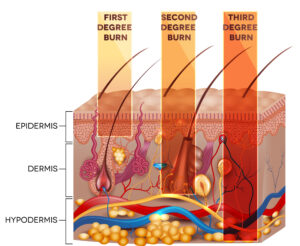
Third-degree burns, also called full-thickness burns, extend through the full thickness of the skin. Mayo Clinic explains that these burns involve all layers of the skin and can sometimes extend into underlying fat or muscle. Because nerve endings may be destroyed, the deepest part of a third-degree burn may have reduced sensation even though surrounding burns can be extremely painful.

For an injured person and family, however, burn depth is only one measure of severity. Doctors also consider the percentage of total body surface area burned, the location of the injuries, whether critical areas such as the face or hands are involved, the patient’s overall condition and the treatment necessary to close the wounds and preserve function.

Third-Degree Burns Destroy the Full Thickness of the Skin

third degree burns from a fire pit explosionThe American Burn Association burn severity guidelines describe full-thickness burns as potentially dry and leathery, with variable coloration and loss of pin-prick sensation. The ABA recommends immediate consultation with consideration for transfer for full-thickness burns and for deep partial- or full-thickness burns involving critical areas such as the face, hands, feet, genitalia, perineum or major joints. Severe 3rd degree burns can therefore involve several medically important characteristics:

A person can have more than one burn depth after the same fire pit accident. The medical record may describe some areas as partial thickness and others as full thickness depending on the duration and intensity of thermal exposure.

Burn Depth and Burn Size Measure Different Things

Burn depth describes how deeply tissue has been injured. Burn size describes how much of the body’s surface area is involved. Both can matter when doctors evaluate severity. A relatively small full-thickness burn can be medically significant because of its depth or location. Conversely, burns involving a large percentage of the body can create major medical risks even when not every area is full thickness.

The American Burn Association uses total body surface area, commonly abbreviated TBSA, as an important component of burn assessment. Partial- and full-thickness burns are included when TBSA is calculated, while superficial burns are not. This distinction is important in a legal case as well. A statement that someone suffered “third-degree burns” does not fully describe the injury unless the location, TBSA, associated partial-thickness burns, surgical treatment and long-term consequences are also understood.

Total Body Surface Area Helps Describe Burn Severity

TBSA estimates the percentage of the body’s surface affected by qualifying burns. Medical professionals may use methods such as the Rule of Nines or the patient’s palm to help estimate burn size. The ABA notes that the patient’s entire palmar surface is approximately 1% of TBSA for estimation purposes.

Burn records may therefore contain descriptions such as 10%, 20% or 40% TBSA. Those percentages can help communicate the extent of the injury, but they should be read together with burn depth and location. Important severity factors can include:

A family’s understanding of the injury can change considerably once these details are examined. “Burned on the arms and chest,” for example, may describe anything from relatively limited injury to extensive deep burns requiring multiple operations.

Fire Pit Accidents Can Cause Deep Burns in Seconds

The severity of a fire pit burn depends partly on the accident mechanism. A person who briefly touches a hot surface experiences a different thermal exposure from someone struck by projected burning liquid fuel. During flame jetting from a fire pit, flame and potentially burning fuel can be expelled from a fuel container toward the person refueling and nearby bystanders. Burning liquid can reach skin or clothing and extend thermal exposure beyond the initial burst.

During ethanol flashback ignition, flame travels backward toward the fuel source during refueling. The person holding the container may have the hands, arms, face and upper body near the flame pathway. If the event progresses into container ignition, flame jetting or a pool fire, the burn exposure can become more extensive.

A difficult-to-see flame can precede either sequence. When low-visibility ethanol flames cause someone to believe a fire pot is extinguished, fresh fuel may be introduced while an ignition source remains. These mechanisms explain why a small tabletop fire pot can produce injuries far more serious than its size might suggest.

Severe Burns Can Require Specialized Burn-Center Care

Deep or extensive burns may require treatment at a specialized burn center. The American Burn Association recommends immediate consultation with consideration for transfer for full-thickness burns, partial-thickness burns involving at least 10% TBSA, and deep partial- or full-thickness burns involving areas such as the face, hands, feet or major joints.

Mayo Clinic likewise explains that people with major burns may require specialized burn-center treatment, skin grafts, physical therapy and months of follow-up care. Depending on the injuries, severe burn treatment may involve:

Not every patient requires every treatment. The medical course depends on the individual injury, and treatment decisions should be evaluated from the actual records rather than assumed from a burn label alone.

Third-Degree Burns Often Lead to Surgery and Skin Grafting

Full-thickness skin cannot simply regenerate in the same way as a superficial injury. Mayo Clinic notes that third-degree burns often require skin grafts to close the wound. Deep fire pit burns may therefore require removal of damaged tissue followed by grafting, sometimes through more than one operation. Skin taken from another part of the patient’s body creates a donor site that must heal in addition to the original burn wound.
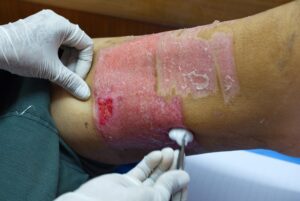
3rd degree burns for a fire pit explosion may require skin graftsThe complete treatment process—including excision, donor sites, grafting, repeat operations and rehabilitation—is addressed through fire pit burn surgery and skin grafts when the medical consequences extend beyond the initial burn hospitalization.

Third-degree burns can involve permanent tissue damage, repeated surgery, grafting and substantial future medical needs. Severe fire pit burn injury lawyers can evaluate potential product-liability claims while medical specialists document the full course of treatment, permanent limitations, lost earnings and other damages recognized under applicable law.

Burns to the Face, Hands and Joints Can Be Especially Serious

The percentage of the body burned does not tell the entire story. Location can dramatically affect treatment, function and long-term consequences. The American Burn Association specifically identifies deep partial- and full-thickness burns involving the face, hands, feet, genitalia, perineum or joints as injuries warranting immediate burn-center consultation with consideration for transfer. Burns involving these areas can create distinct concerns:

Severe fire pit facial burns and disfigurement may require grafting, reconstruction and long-term scar treatment while creating consequences that extend beyond the general severity issues addressed here.

Pain Does Not Always Reveal How Deep a Burn Is

make that assumption unreliable.

Third-degree burns can destroy nerve endings within the full-thickness injury. Mayo Clinic notes that these areas may have little or no pain because nerves have been damaged, even though surrounding partial-thickness burns can be intensely painful. That does not mean a person with severe burns experiences little pain. Extensive burn injuries can involve multiple burn depths, painful wound care, operations, donor sites, dressing changes and rehabilitation. The absence of sensation in one full-thickness area should not be confused with the overall pain and suffering associated with a catastrophic burn injury.

Severe Burns Can Affect the Entire Recovery Process

The effects of a serious burn can extend far beyond the visible wound. Major burns can involve long hospitalizations, repeated procedures, physical limitations and substantial rehabilitation.

Recovery may include:

Mayo Clinic notes that major-burn treatment can include surgery, skin grafting, physical therapy and months of follow-up care, with goals that include reducing scarring and restoring function. For many families, “survival” is only the beginning of the medical story. Recovery can continue after hospital discharge and after the wounds have technically closed.

Medical Evidence Can Establish the True Severity of a Fire Pit Burn

Photographs can show the visible injury, but medical records provide additional information needed to understand burn depth, size and treatment. Important medical evidence of 3rd degree fire pit burns can include:

Accident evidence is also important. The fire pit, fuel container, remaining fuel, warnings, purchase records, photographs and video can help establish how the thermal exposure occurred while the medical evidence establishes its consequences. Preserving both sides of that evidence allows investigators to connect the accident mechanism with the resulting injuries rather than evaluating either in isolation.

Questions Families Ask About Third-Degree Fire Pit Burns

Is a third-degree burn the same as a full-thickness burn?

Yes. Third-degree burn is the commonly used term for a full-thickness burn involving destruction through the full thickness of the skin.

Does a third-degree burn always hurt more than a second-degree burn?

Not necessarily at the deepest part of the wound. Full-thickness burns can destroy nerve endings, which may reduce sensation in that area. Surrounding partial-thickness burns, wound care, surgery and donor sites can nevertheless be extremely painful.

Does every third-degree burn require a skin graft?

Treatment depends on the individual injury, but third-degree burns often require surgical closure or grafting because the full thickness of the skin has been destroyed. Mayo Clinic specifically notes that third-degree burns often need skin grafts to close the wound.

What does TBSA mean?

TBSA means total body surface area. It estimates how much of the body’s surface is affected by qualifying burns. Medical professionals use TBSA together with burn depth, location and other factors when assessing severity.

Why does the location of the burn matter?

A smaller deep burn involving the face, hands or a major joint can create serious functional or reconstructive problems even when the total percentage of the body burned is relatively limited.

Can severe burn treatment continue after hospital discharge?

Yes. Depending on the injury, treatment can continue through wound care, therapy, scar management, additional surgery and reconstruction. Major-burn recovery may require months of follow-up care.

Who May Be Responsible for a Severe Fire Pit Burn

The severity of a burn establishes the seriousness of the injury, but it does not by itself determine legal responsibility. Liability depends on the fire pit, fuel and container involved, how the accident occurred, product design, warnings, distribution chain and applicable law.

Depending on the evidence, an investigation may involve the fire-pot manufacturer, fuel or container manufacturer, importer, distributor, retailer, online seller or component supplier. Potential claims can include defective design, inadequate warnings or instructions, manufacturing defects, negligence, breach of warranty and other claims recognized by the governing jurisdiction.

Where the product was purchased can also matter. Fire pits and alcohol-fuel products may be sold through traditional stores, Amazon, eBay and other online marketplaces, while used products may appear through resale platforms. Determining retailer and online seller liability can require identifying the actual seller, manufacturer, product listing, warnings supplied with the product, distribution chain and any recall or safety information associated with the particular fire pit or fuel.

A family’s case should begin with the evidence rather than an assumption that either the consumer or a particular company was automatically responsible. Product identification, warnings, prior incidents, applicable safety actions, accident reconstruction and preservation of the original fire pit and fuel container can all become important.

Talk to a Lawyer About Third-Degree and Severe Fire Pit Burns

tag Fire pit injury lawyer can help across the USAA catastrophic fire pit burn case requires careful documentation of both the accident and the medical consequences. Burn-depth assessments, TBSA calculations, photographs, hospital records, operative reports, rehabilitation records and future-care recommendations can help establish the extent of the injury, while the fire pit, fuel container, warnings and accident evidence can help determine why it occurred.

David P. Willis — Board Certified Personal Injury Trial Lawyer for Third-Degree and Severe Fire Pit BurnsDavid P. Willis has represented seriously injured people and families in catastrophic injury and defective-product litigation for more than 40 years. Severe fire-pot cases can involve product engineering, warnings, fuel systems, accident reconstruction, burn-center treatment and permanent injury.

David P. Willis has been Board Certified in Personal Injury Trial Law since 1988 by the Texas Board of Legal Specialization. He was licensed in Texas in 1983 and New York in 2005 and formerly served as a Briefing Attorney to Justice Robert M. Campbell of the Supreme Court of Texas. Cases outside those jurisdictions can be handled with qualified affiliated or local counsel when required without increasing the client’s attorney fee.

Cases are handled on a contingency-fee basis. Attorney fees are not owed unless compensation is recovered. Families dealing with full-thickness burns, extensive hospitalization or permanent injury can discuss a severe fire pit burn case with our legal team for a free, confidential case evaluation.

Injuries

GET IN TOUCH

CALL 24/7

GET A FREE CASE REVIEW