Fire Pit Burns & Explosions

Board-Certified Personal Injury Trial Lawyer

$100,000,000's Recovered for Clients

Fire Pit Burns & Explosions

$100,000,000's
Recovered for Clients

Fire Pit Burns, Injuries & Long-Term Consequences

A fire pit accident can cause severe burn injuries within seconds, including deep partial-thickness and third-degree burns that may require hospitalization, skin grafts, reconstructive surgery and prolonged rehabilitation. Alcohol- and ethanol-fueled tabletop fire pits can expose users and nearby bystanders to sudden flame, projected burning fuel and spreading pool fires. The resulting injuries can range from painful partial-thickness burns to full-thickness burns requiring surgery, skin grafting, rehabilitation and reconstruction.

The size of a fire pit does not necessarily predict the severity of the injuries it can cause. During flame jetting or a refueling accident, burning liquid fuel can reach the face, hands, arms, chest or clothing and continue burning after the initial flash. A person seated across a table may suffer severe injuries without ever touching the fire pit.

Serious fire pit burn injuries should therefore be evaluated by both the accident mechanism and the medical consequences. Burn depth, total body surface area, location, surgery, grafting, scarring, functional impairment and future treatment can all affect recovery and a potential legal claim.

Fire Pit Accidents Can Cause Several Types of Burn Injuries

Not every fire pit burn is medically the same. The depth, size and location of a burn can vary across the body, and a single accident can produce several burn depths simultaneously. A person struck by projected flame or burning liquid fuel may suffer relatively shallow burns in one area and much deeper injuries elsewhere.

Fire pit injuries can include:

The medical consequences also depend on where the injury occurs. A relatively small deep burn to the face, hand or major joint can create serious functional or reconstructive problems even when the percentage of the body burned is limited. Third-degree and severe fire pit burns can require specialized burn-center care, surgery and prolonged rehabilitation, while burns involving the face or hands may create significant functional and reconstructive concerns.

Third-Degree Burns Can Destroy the Full Thickness of the Skin

Third-degree burns, also called full-thickness burns, extend through the full thickness of the skin. These injuries can require specialized burn-center treatment and may need surgical closure or skin grafting.

Medical illustration of fire pit burn injuries showing first, second, and third-degree burns from alcohol fuel explosions

Burn severity involves more than depth. Doctors may also consider the percentage of total body surface area involved, commonly called TBSA, the location of the burns, the patient’s age and condition, and whether critical areas such as the face, hands or major joints are affected.

Detailed information about third-degree and severe burns includes full-thickness injury, TBSA, burn-center care and the medical consequences of catastrophic thermal injuries. The American Burn Association identifies full-thickness burns and deep burns involving areas such as the face, hands, feet or major joints among injuries that warrant immediate burn-center consultation with consideration for transfer.
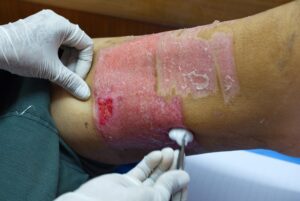
Skin Grafts and Burn Surgery Can Become a Major Part of Recovery

3rd degree burns with needed skin grafts are common in fire pit burn accidentsDeep burns may not heal adequately without surgery. Treatment can involve debridement or excision of damaged tissue followed by skin grafting, wound care and rehabilitation.

When a patient’s own healthy skin is used for an autograft, skin is harvested from another area of the body. That donor site then becomes an additional wound that must heal. Patients with extensive injuries may therefore be recovering simultaneously from the original burn, grafted areas and donor sites.

Serious fire pit burn surgery, skin grafts and donor sites can involve:

Recovery should not be measured simply by when someone leaves the hospital. Treatment can continue for months or longer as grafts heal, scars mature and doctors evaluate function and the need for future reconstruction.

Facial Burns Can Cause Scarring, Disfigurement and Functional Injuries

The face contains many specialized structures within a relatively small area. Deep burns can affect the eyelids, lips, nose, ears, cheeks, chin and neck while causing both permanent visible changes and functional problems.

Serious facial burns, scarring and disfigurement may require grafting, scar treatment and reconstruction. Scar contraction around the eyelids can interfere with normal eye protection, while burns around the mouth can affect movement. Neck scars can tighten and restrict range of motion.

Permanent facial injury can also create damages beyond the immediate medical bills. Depending on the facts and applicable law, an injury claim may involve future treatment, physical impairment, lost income, pain, disfigurement and other legally recognized losses. The psychological and social effects should be evaluated from the injured person’s actual experience rather than assuming every person responds to visible scarring in the same way.

Children and Bystanders Can Be Burned Without Touching the Fire Pit

Some of the most troubling fire pit accidents involve people who were not operating or refueling the device. Projected flame and burning liquid can travel beyond the fire pot and strike someone seated or standing nearby.

Serious child and bystander fire pit injuries can occur when a person across a table is exposed to flame jetting or when spilled burning fuel spreads beyond the intended combustion area.

Children can present additional concerns because they may be seated near tabletop devices and may not understand the danger associated with a small flame or liquid fuel. When burns occur during childhood, treatment and reconstruction may also require continued evaluation as the child grows. Witness positions, photographs and video can become important evidence when investigators need to determine how flame or burning fuel reached someone who never touched the product.

Tabletop Fire Pits Can Cause Injuries Far Out of Proportion to Their Size

Tabletop fire pits are often marketed as small decorative products for patios, tables and gathering areas. Their appearance can make them seem less hazardous than larger fire features even though some models burn pourable alcohol-based fuel.

Serious tabletop fire pit burn injuries can occur during refueling, tipping, spilling or sudden fire events. Because users and guests may be sitting only a few feet from the device, projected flame or burning fuel can reach people rapidly. An investigation may examine the stability of the device, fuel reservoir, extinguishment method, refueling instructions, warnings, fuel container and whether appropriate flame-mitigation features were incorporated into the products.

Low-Visibility Flames Can Precede Severe Burn Accidents

Alcohol flames can be difficult to see under some conditions, particularly as the fuel level becomes low. Alcohol vapor is invisible. A person may therefore believe a fire pot has gone out while a small flame or other ignition source remains. When low-visibility ethanol flames contribute to a refueling decision, fresh fuel and vapor may be introduced into an active ignition zone.

The visibility issue is important because it can explain why someone attempted to refill the device. It does not by itself establish a product defect or determine liability. Investigators may need to examine what the consumer could see, what warnings were provided and how the device was intended to be extinguished and refilled.

Flashback and Flame Jetting Can Cause Close-Range Burns

Alcohol fire pit erupts in jet of flame during refilling, resulting in serious burn injuries at patio tableIf vapor around a pouring fuel stream ignites, flame can propagate backward toward the fuel source. This ethanol flashback ignition can expose the hands, arms, face and upper body of the person holding the container.

If ignition reaches the container and flame or burning fuel is then expelled outward, the event can progress into flame jetting from a table-top fire pit. People nearby can be struck by projected flame or burning liquid even when they never handled the fuel. Flashback and flame jetting are related but different mechanisms. Keeping them separate can help explain how the accident progressed and what evidence should be examined.

Pool Fires and Burning Liquid Fuel Can Extend the Injury

Not every severe fire pit burn results solely from the initial flash or flame jet. Spilled alcohol fuel can burn across a tabletop, floor, patio, clothing or other surface and create a secondary pool fire.

Burning liquid fuel can extend the duration of thermal exposure. Clothing can also trap burning fuel against the body or ignite, increasing the area and depth of injury. Investigators may therefore need to distinguish among the initial ignition, projected flame, spilled burning fuel and secondary fires rather than treating the entire accident as one undifferentiated “explosion.”

Severe Burn Recovery Can Continue Long After Hospital Discharge

Surviving the initial accident can be only the beginning of recovery. Deep burns can require repeated procedures, prolonged wound care, rehabilitation and later reconstruction. Long-term consequences can include:

The American Burn Association and major burn centers recognize burn recovery as a continuing process involving wound closure, rehabilitation, scar management and, for some patients, reconstructive treatment.

Legal Representation for Catastrophic Fire Pit Burns

Serious fire pit burns can require hospitalization, multiple surgeries, skin grafts, rehabilitation and lifelong treatment for permanent scarring or disability. Experienced fire pit burn injury attorneys can investigate defective products, alcohol fuel containers, inadequate warnings and potentially responsible manufacturers or sellers. David P. Willis, Board Certified in Personal Injury Trial Law since 1988, has more than 40 years of experience representing people with catastrophic injuries.

Medical Evidence Can Show the Full Consequences of a Fire Pit Burn

A serious burn claim should not be evaluated only from the emergency-room diagnosis. The medical record can document how the injury evolved and what treatment was required over time. Important medical evidence can include:

Serial photographs can be particularly valuable because burns, grafts and scars change throughout recovery. Photographs taken during hospitalization, after surgery and after scar maturation can communicate consequences that may not be fully captured in written records.

Accident Evidence and Medical Evidence Should Be Preserved Together

Medical records establish what happened to the body. Product and accident evidence can help establish why the injury occurred. Families should preserve the fire pit, original fuel container, remaining fuel, caps, nozzles, inserts, packaging, warnings, receipts, online purchase records, photographs and video. Products should not be cleaned, tested, altered, discarded or returned before they can be evaluated.

Proper fire pit explosion evidence preservation can allow investigators to connect the accident mechanism with the resulting injuries while the relevant physical and digital evidence still exists.

Questions Families Ask After a Serious Fire Pit Burn

How can such a small fire pit cause such severe burns?

Some alcohol-fueled fire pit accidents involve projected flame or burning liquid rather than brief contact with a small stationary flame. Burning fuel can reach skin, clothing or multiple people within seconds.

What is the difference between a second-degree and third-degree burn?

Burn classifications describe depth. Third-degree or full-thickness burns destroy the full thickness of the skin, while partial-thickness burns preserve varying amounts of deeper skin structure. A single accident can cause several burn depths.

What does TBSA mean?

TBSA means total body surface area. It estimates the percentage of the body’s surface affected by qualifying burns and is one factor doctors use when evaluating burn severity.

Why would someone need a skin graft?

Deep burns may destroy skin too extensively to heal adequately on their own. After damaged tissue is removed and the wound is prepared, grafting can provide skin coverage.

Why does the donor site hurt if it was not burned?

When a patient’s own skin is used for a graft, healthy skin is harvested from another part of the body. That donor site becomes a separate wound that must heal.

Will a facial burn always cause permanent disfigurement?

Not necessarily. The outcome depends on burn depth, location, healing, whether grafting was required and the individual patient’s recovery.

Can someone across the table suffer severe burns?

Yes. Flame jetting and burning liquid fuel can travel beyond the fire pit. Bystanders do not have to touch or operate the device to be injured.

What should our family save after the accident?

Preserve the fire pit, fuel container, remaining fuel, packaging, warnings, receipts, photographs and video. Do not return, alter or test the products before they can be evaluated.

Can treatment continue years after the accident?

It can. Some patients require later scar management, reconstructive procedures or therapy when mature scars affect function or appearance.

Who May Be Responsible for Serious Fire Pit Burn Injuries

The severity of an injury does not by itself establish who was legally responsible. Liability depends on the products involved, accident mechanism, design, warnings, distribution chain and applicable law. Depending on the evidence, an investigation may involve the fire-pot manufacturer, fuel or fuel-container manufacturer, component supplier, importer, distributor, retailer or online seller.

Fire pits and alcohol fuels may be purchased through traditional stores, Amazon, eBay and other marketplaces. Determining retailer and online seller liability may require identifying the actual seller, manufacturer, product listing, warnings provided with the product and the company’s role in the transaction. Potential claims can include defective design, inadequate warnings or instructions, manufacturing defects, negligence, breach of warranty and other claims recognized by the applicable jurisdiction. The investigation should begin with the evidence rather than an assumption that either the consumer or a particular company was automatically responsible.

Talk to a Lawyer About Serious Fire Pit Burn Injuries

course. The fire pit, fuel container, warnings, photographs and video can help reconstruct the event, while burn-center records, operative reports, graft documentation and rehabilitation records establish the medical consequences.

David P. Willis has represented seriously injured people and families in catastrophic injury and defective-product litigation for more than 40 years. Fire-pot burn cases can involve engineering, warnings, fuel systems, accident reconstruction, burn surgery and permanent injury.

: David P. Willis — Board Certified Personal Injury Trial Lawyer for Serious Fire Pit Burn InjuriesDavid P. Willis has been Board Certified in Personal Injury Trial Law since 1988 by the Texas Board of Legal Specialization. He was licensed in Texas in 1983 and New York in 2005 and formerly served as a Briefing Attorney to Justice Robert M. Campbell of the Supreme Court of Texas. Cases outside those jurisdictions can be handled with qualified affiliated or local counsel when required without increasing the client’s attorney fee.

Cases are handled on a contingency-fee basis. Attorney fees are not owed unless compensation is recovered for you.  

Call 24/7 to discuss your serious fire pit burn case with our legal team.

Contact Us to File a Fire Pit Lawsuit

If you or a loved one suffered severe burns or injuries from a fire pit, alcohol or ethanol fire pit, or tabletop flame device, you may be entitled to financial compensation.

Call 1-800-447-FIRE or submit our Free Case Review form below for an immediate call back and case evaluation.

Injuries

GET IN TOUCH

CALL 24/7

GET A FREE CASE REVIEW