
Reviews 

A serious fire pit burn can leave consequences that continue long after the original wounds close. Permanent scars may become raised, thickened, discolored, painful, sensitive or tight, and scar tissue can restrict movement when it crosses the neck, hands, arms or major joints.
The final appearance and function of a burn injury may not be apparent during the initial hospitalization. Burns continue healing, grafted skin changes, and scars can mature over many months. Some people require prolonged scar management, physical or occupational therapy, reconstructive procedures or later surgery after the acute burn has healed.
Fire pit burn scarring and disfigurement should therefore be evaluated over time rather than from a single photograph or early medical examination. The location, depth and size of the original burn, whether skin grafting was required, scar maturation, functional impairment and future treatment can all affect the long-term consequences of an injury.
 A healed burn wound does not necessarily represent the final appearance of the injury. Scar tissue can continue changing after the skin has closed, and scar maturation can affect color, thickness, texture, sensitivity and flexibility.
Some scars gradually become flatter and less noticeable. Others remain raised, firm, irregular or visibly different from surrounding skin. Grafted areas may also develop differences in pigmentation, texture and flexibility that remain apparent after healing. Long-term changes can include:
Medical guidance concerning burn scar maturation and contractures recognizes that burn scars can continue evolving after wound closure and that scar tissue can affect comfort, appearance and movement during recovery. For families evaluating a severe burn, the important question is often not simply whether a wound has closed, but what the scar will look and feel like after it has matured.
Even after surgery, victims live with keloid scars, nerve hypersensitivity, or loss of mobility in joints. These physical and psychological consequences form the core of disfigurement damages in a lawsuit.
Some deep burns heal with hypertrophic scarring. These scars can become raised, firm and more prominent than surrounding skin while generally remaining within the boundaries of the original injury.
Hypertrophic scars can create problems beyond appearance. They may itch, hurt, feel unusually sensitive or make the skin less flexible. When a scar crosses an area that needs to move, thickness and tightness can contribute to functional limitations. Scar characteristics can change during recovery, so medical evaluation over time is important. Treatment recommendations should be based on the individual’s actual scar rather than an assumption that every deep burn will heal in the same way.
As burn scars mature, scar tissue can tighten. A contracture occurs when this tightening restricts movement or alters the position of surrounding tissue. Contractures can be especially important when burns cross:
A neck contracture may make it difficult to turn or extend the head. Scarring across an elbow or knee can restrict bending or straightening. Hand contractures can interfere with grip, dexterity and everyday activities. Permanent burn scarring from fire pits can therefore be both a disfigurement and a functional injury. Photographs may document appearance, but range-of-motion measurements, therapy records and medical examinations may be needed to establish what the scar does to the person’s movement and function.
Permanent burn scars can affect appearance, movement, sensation and daily activities long after the original wounds close. Serious burn injury lawyers can evaluate the legal claim while medical specialists document scar maturation, contractures, reconstructive needs and lasting impairment. Those consequences may be relevant to damages when supported by the evidence and governing law.
Burn depth can influence healing and the likelihood of significant permanent scarring. Deep burns that destroy substantial skin tissue may require surgical treatment and can leave lasting changes in appearance and function.
Severe and third-degree fire pit burns can involve full-thickness skin destruction, substantial total body surface area and injuries to functionally important locations. Burn depth and initial severity are different issues from the mature scar, but they can help explain why significant permanent scarring developed. A single accident can also produce different burn depths across the body. One area may heal with relatively limited scarring while another requires grafting and develops substantial permanent changes.
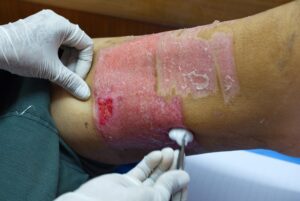 Deep burns may require skin grafting after damaged tissue is surgically removed. When a patient’s own skin is used, tissue is harvested from another part of the body, creating a donor-site wound in addition to the original burn.
Serious fire pit burn surgery and skin grafts can involve multiple operations, graft healing, donor-site care, rehabilitation and later reconstructive treatment.
Both the grafted area and donor site can contribute to the long-term appearance of the injury. Grafted skin may differ from surrounding skin in texture, pigmentation, thickness or flexibility, while donor sites can also leave lasting visible or sensory changes. For that reason, documenting only the original burn can understate the total physical consequences of treatment.
Facial scarring presents distinctive concerns because burns may involve specialized structures such as the eyelids, lips, ears, nose and neck. Scar contraction in these locations can affect function as well as appearance. Serious fire pit facial burns and scarring can involve eyelid movement, mouth function, neck mobility, reconstructive treatment and permanent visible changes.
A facial scar may therefore have consequences that cannot be evaluated solely by its size. Location, depth, movement, distortion of surrounding tissue and future reconstructive needs can all matter.
A scar does not have to restrict movement to create ongoing physical symptoms. Burn survivors can experience itching, tenderness, hypersensitivity, numbness or other altered sensations as wounds and scars mature. Those symptoms can affect sleep, clothing choices, physical activity and everyday comfort. Some people may also experience discomfort when scarred skin is stretched or exposed to temperature changes.
The severity and duration of these symptoms vary. Medical records should document the individual’s actual complaints, treatment and response rather than assuming that every burn scar causes chronic pain or sensory problems.
The functional consequences of scarring depend heavily on location. Burns involving hands, fingers, wrists and major joints can interfere with activities requiring range of motion, strength or fine motor control. A person may experience difficulty with:
Physical and occupational therapy records can be particularly important because they document functional limitations, range of motion and progress during rehabilitation.
Burn scars in children can require long-term attention because a child’s body continues growing while scarred or grafted tissue may behave differently from surrounding tissue. Depending on the location and severity of the injury, treatment needs may change as the child grows. Continued evaluation can involve scar management, therapy or additional reconstructive procedures.
Serious child and bystander fire pit burns can therefore create consequences extending well beyond the initial hospitalization. The child’s actual medical course, growth and functional needs should guide evaluation of future treatment.
Treatment does not necessarily end when a burn wound closes. Depending on the injury, doctors and therapists may recommend continuing treatment intended to improve comfort, mobility, scar characteristics or function.
Treatment can include:
The appropriate treatment depends on the individual scar and medical recommendations. No single treatment is appropriate for every burn survivor. Some people improve substantially without later surgery. Others may require staged treatment because the consequences of scar maturation become clearer over time.
Disfigurement describes a lasting alteration in physical appearance. A severe burn may leave visible differences in color, contour, texture or shape even after medical treatment is complete. Permanent disfigurement can affect exposed areas such as the face, neck, arms and hands, but scars do not have to be visible to strangers to have meaningful consequences. Extensive scarring elsewhere on the body can affect clothing, intimacy, physical comfort and how an injured person experiences everyday life.
The emotional and social consequences are individual. Some people experience distress, unwanted attention or changes in confidence related to their scars, while others respond differently. Those consequences should be established from the person’s actual experience and appropriate evidence rather than assumed.
A single photograph rarely captures the entire history of a serious burn. The appearance of an injury can change dramatically between emergency treatment, surgery, graft healing and mature scarring. Useful photographic documentation can include:
Photographs should be dated when possible. Images taken under reasonably consistent conditions can help demonstrate how a scar changed rather than merely showing one moment in recovery. Medical photographs should also be preserved when available. Burn-center and surgical records may contain images documenting wound depth, grafting and scar development.
Photographs are important, but they cannot fully establish pain, itching, restricted movement or future treatment.
Medical evidence can include:
This evidence can help distinguish a scar that is primarily visible from one that also produces significant functional impairment.
Long-term injury evidence does not replace the need to determine why the fire pit accident occurred. A serious burn case may require examination of the fire pot, alcohol fuel, fuel container, warnings, accident photographs and witness accounts. Proper preserving fire pit accident evidence can help connect the permanent injuries to the mechanism that caused them.
If the accident involved refueling, the original fuel bottle can be particularly important. The fire pit and fuel container should not be discarded merely because the injured person has completed the initial hospitalization. The products and medical evidence answer different questions: the products can help explain why the accident happened, while the medical evidence establishes what the accident did to the person.
Will fire pit burn scars be permanent?
Some burns heal with relatively limited lasting changes, while deeper burns can produce permanent scarring. The outcome depends on burn depth, location, healing, grafting and the individual’s recovery.
When can doctors tell what a burn scar will finally look like?
Burn scars can continue changing after the wound closes. Doctors may need to follow scar maturation over time before the long-term appearance and functional consequences become clear.
Why is the scar becoming raised or thicker?
Some burns develop hypertrophic scars that become raised and firm during healing. Medical evaluation can determine the type of scar and whether treatment is appropriate.
Can burn scars restrict movement?
Yes. Scar contraction across the neck, hands or joints can restrict movement and sometimes require therapy or surgical treatment.
Why does grafted skin look different from the surrounding skin?
Grafted skin may differ in color, texture, thickness or flexibility from surrounding skin. Its appearance can also change as the graft and scars mature.
Can a donor site leave a permanent scar?
It can. Donor sites are separate wounds created when healthy skin is harvested for grafting, and they may leave lasting changes in appearance or sensation.
Can burn scars remain painful or itchy?
Yes. Some people experience pain, itching, tenderness or altered sensation as scars mature. The symptoms and duration vary among patients.
Can scar treatment occur years after the fire pit accident?
Depending on the injury, later scar management or reconstructive treatment may be considered after the original wounds have healed. Medical recommendations should guide the timing and type of treatment.
Should our family keep taking photographs after the wounds close?
Yes. Serial photographs can document scar maturation, pigmentation, contractures, grafted areas and permanent appearance over time.
Does permanent scarring or disfigurement affect an injury claim?
Potentially. Depending on the governing law and evidence, permanent scarring, disfigurement, physical impairment, future treatment and other consequences may be relevant damages. The existence of a scar does not by itself determine the value of a claim.
Permanent scarring establishes an important consequence of an accident, but it does not by itself determine legal responsibility.
Depending on the evidence and applicable law, an investigation may involve the fire-pot manufacturer, fuel or fuel-container manufacturer, component supplier, importer, distributor, retailer or online seller. Determining online seller and retailer liability may require identifying the actual seller, manufacturer, product listing, warnings supplied with the product and the company’s role in the distribution chain.
Potential claims can include defective design, inadequate warnings or instructions, manufacturing defects, negligence, breach of warranty and other theories recognized under applicable law. The investigation should begin with what happened, what products were involved and what the evidence establishes rather than assuming that either the consumer or a particular company was automatically responsible.
Permanent burn-scar cases can require evidence extending far beyond the initial hospitalization. Burn-center records and operative reports establish the original injury and treatment, while serial photographs, skin-graft records, range-of-motion measurements, therapy notes and reconstructive evaluations can show how scarring changed over time and whether it ultimately affected appearance, movement or function.
For a person living with permanent scars or contractures, the long-term consequences may include additional treatment, restricted movement, visible disfigurement, pain or sensitivity and changes in everyday activities. A legal investigation should document those consequences individually rather than treating a healed burn wound as the end of the injury.
 David P. Willis has been Board Certified in Personal Injury Trial Law since 1988 by the Texas Board of Legal Specialization. During more than 40 years representing seriously injured people and families, he has handled catastrophic injury and defective-product litigation involving permanent injuries and long-term damages. He is licensed in Texas and New York and formerly served as a Briefing Attorney to Justice Robert M. Campbell of the Supreme Court of Texas.
Fire pit cases outside Texas and New York can be handled with qualified affiliated or local counsel when required without increasing the client’s attorney fee. Cases are handled on a contingency-fee basis, and attorney fees are not owed unless compensation is recovered.
If a fire pit burn has left permanent scarring, disfigurement or restricted movement, evaluate a permanent fire pit burn injury with our legal team in a free, confidential consultation. Preserving the medical history, photographs and product evidence can help establish both how the accident occurred and how the injury continues to affect the person’s life.

Copyright © 2026 All Rights Reserved.
FirePitLawsuits.com – National investigations of alcohol-fueled fire pit explosions and burn injuries. Willis Law Firm handles product defect cases nationwide. David Willis is licensed by the State Bar of Texas since 1983 and Board Certified in Personal Injury Trial Law by the Texas Board of Legal Specialization since 1988 — a certification held by fewer than 2% of Texas attorneys. He is admitted to practice law in New York and was recognized by the American Association for Justice with the Steven Sharp Public Service Award for product defect investigation work that contributed to one of the largest federal safety recalls in US history. Willis Law Firm, 5005 Riverway Drive, Suite 160, Houston, Tx. – Principal Place of Business – All Meetings by Appointment Only.