Fire Pit Burns & Explosions

Board-Certified Personal Injury Trial Lawyer

$100,000,000's Recovered for Clients

Fire Pit Burns & Explosions

$100,000,000's
Recovered for Clients

Child & Bystander Fire Pit Burns, Facial Injuries & Legal Claims

A child or bystander can suffer catastrophic burns from a tabletop fire pit without ever touching the product, lighting the burner or pouring the fuel. A flame-jetting event can rapidly project flame and burning liquid beyond the person refueling, while spilled alcohol or an uncontrolled pool fire can spread across a table, patio, clothing or surrounding area.

children can get 3rd degree facial burns when fire pit flash fire occursThat danger is particularly important when small decorative fire pots are placed where families and friends gather. Children may be sitting or standing only a few feet from the flame. Other bystanders can include spouses, grandparents, relatives, guests, restaurant patrons and friends who had no role in operating the product.

Government safety authorities have specifically recognized the bystander hazard. CPSC describes flame jetting as capable of propelling flames and burning liquid onto consumers or bystanders, and Health Canada reports severe flame-jetting injuries to users and bystanders, including children. The speed of the event can leave little opportunity to move away.

A Bystander Can Be Severely Burned Without Touching the Fire Pit

The person closest to the fuel bottle is not necessarily the only person at risk. Burning liquid can travel beyond the burner and reach someone who never handled either product. A nearby person can be exposed through:

Health Canada explains that flame jetting can occur extremely quickly and can project burning fuel a hazardous distance toward both users and bystanders. The location of each person immediately before the event can therefore become important evidence. Photographs, video, witness statements and the physical scene may help establish where the child or other injured person was positioned and how flame or burning fuel reached them.

Flame Jetting Can Reach Children and Other People Nearby

During refueling, an existing ignition source can ignite fuel vapor associated with the pouring stream. Flame can propagate toward the container, and under some circumstances flame and burning liquid can then be projected outward.

tag Fire pit flash fire or fuel jetting during re-fuelingDetailed fire pit flame-jetting accidents can injure someone several feet from the person holding the bottle. Health Canada reports that flame jetting occurs so quickly that users and bystanders may be unable to react in time and that expelled fuel can burn clothing and skin.

CPSC likewise warns that flame jetting can propel flames and burning liquid onto bystanders. Its 2026 Houswise warning specifically describes the potential for burning liquid to travel long distances and reports injuries including third-degree burns. A fuel container does not necessarily have to physically rupture for a violent fireball or outward projection to occur. Preserving the bottle can help determine how the event developed.
A Small Alcohol Flame May Still Be Burning When It Looks Extinguished

Alcohol flames can be difficult to perceive, particularly when fuel is running low, while alcohol vapor itself is invisible. A person may believe the fire has gone out and bring fresh liquid fuel near the burner while an ignition source remains. The relationship between difficult-to-see alcohol flames and refueling can help explain why an accident occurred while children or other family members remained nearby.

Health Canada identifies low flame visibility as part of the flame-jetting hazard and describes it as a hidden danger that may not be obvious to users or bystanders. The fact that someone poured additional fuel does not automatically determine legal responsibility. Product design, extinguishment method, instructions, warnings, fuel-container design and the actual conduct of those involved must be evaluated under applicable law.

Pool Fires Can Expose Several People at Once

Not every multi-person burn involves flame jetting. Alcohol or another liquid fuel can spill, leak or escape the intended reservoir and ignite across a surrounding surface. CPSC describes uncontrolled pool fires as flames burning across pooled or spilled alcohol and warns that they can suddenly become larger and hotter and spread beyond the fire pit.

A pool-fire investigation can consider:

Distinguishing flame jetting from a pool fire matters because different product features, evidence and accident sequences may be involved.

A Child's Face, Head and Neck Can Be Directly Exposed

Children sitting or standing near a tabletop fire pot can be positioned where projected flame or burning liquid reaches the face, head, neck and upper body. A child may have virtually no time to turn away from a sudden flame jet.

Severe fire pit facial burns, and scarring can involve the eyelids, lips, ears, nose, cheeks and neck. These injuries may require grafting, scar management or reconstructive procedures and can affect function as well as appearance. Facial scar contraction can affect eyelid closure, mouth movement or neck mobility. Burns to the ears and other exposed structures can present additional reconstructive concerns. The long-term consequences should be evaluated from the child’s actual injuries and medical treatment rather than from the initial appearance of the burn alone.

The possibility of facial exposure is one reason the distance and position of a child relative to the burner and person refueling can be important in reconstructing the event.

Burn Depth and Body Surface Area Require Pediatric Evaluation

The severity of a child’s burn depends on depth, location, total body surface area and other medical factors. Children’s body proportions differ from adults, so burn specialists use age-appropriate methods when estimating the percentage of the body involved. Severe third-degree fire pit burns can destroy full-thickness skin and may require specialized burn-center care, surgery and prolonged rehabilitation.

A single event can injure several areas at different depths. The face, hands, arms, chest, legs and other areas may be affected simultaneously when burning fuel is projected or spreads across clothing. Photographs are valuable evidence, but burn depth, TBSA and treatment needs should be established through medical evaluation.

Skin Grafts Can Create Injuries at the Burn and Donor Sites

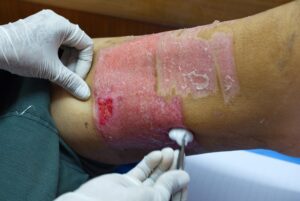
Skin graft for repair of 3rd degree burns due to a fire pit flash fireDeep burns may require surgical removal of damaged tissue followed by skin grafting. When healthy skin is harvested from another part of the child’s body, the donor site becomes a separate wound.

Serious fire pit burn surgery, skin grafts and donor sites can involve multiple procedures, dressing changes, pain management, infection monitoring and rehabilitation. The grafted area and donor site may heal differently from surrounding skin. Both can contribute to permanent changes in color, texture, sensitivity or appearance.

Documenting only the original area struck by flame or burning fuel can therefore understate the total physical consequences of treatment.

Scars and Contractures Can Change as a Child Grows

Wound closure does not necessarily mark the end of a child’s burn injury. Scarred and grafted tissue can continue changing, and growth may make functional restrictions increasingly important. Long-term consequences can include:

Permanent fire pit burns, scars and disfigurement should be documented over time through medical records, therapy measurements and serial photographs when appropriate. If in doubt, take pictures of the burns, procedures, scene evidence and all treatments for months until all badges are off. Do take forget to take pictures of burned hair, clothes or other objects in the fire blast zone.

A neck, hand, elbow or knee contracture can have consequences beyond appearance. It can interfere with movement and ordinary childhood activities as the child grows.

Hand Burns Can Affect Function and Development

Hands are particularly vulnerable when a person instinctively raises them toward a sudden fire or attempts to protect the face. Deep hand burns can affect fingers, joints and areas needed for grip and fine motor activity. Scarring and contracture may interfere with writing, dressing, sports, school activities and other daily tasks.

Physical and occupational therapy records can help document strength, range of motion and functional limitations over time. The medical evidence should distinguish visible scarring from impairment that affects how the hand actually functions.

Emotional Consequences Should Be Established From the Child's Experience

A severe burn can involve hospitalization, painful treatment, repeated operations and permanent changes in appearance. Some children may experience fear, anxiety, sleep disturbance, distress about scars or other emotional consequences. Those effects should not simply be assumed because the physical injuries are severe.

When emotional or psychological injuries exist, they should be documented through the child’s actual history and appropriate professional evidence. The same principle applies to adult bystanders. Individualized evidence is more credible than generalized assumptions about how every burn survivor must respond.

Someone Else's Refueling Does Not Automatically Decide Responsibility

Families may initially assume that the person pouring alcohol must be responsible for every resulting injury. The legal analysis can be more complicated.

Depending on the facts, an investigation may examine:

Health Canada’s technical assessment is particularly relevant to this issue because it characterizes flame jetting during refueling as a hidden hazard that can arise during foreseeable circumstances when low flame visibility leads a user to believe the fire is extinguished. Responsibility should therefore be determined from the evidence and applicable law rather than from an automatic assumption about either the person pouring fuel or a particular company.

The Fire Pot and Fuel Container May Have Different Manufacturers

A refueling event can involve two separate consumer products. The decorative burner may have one manufacturer, while the alcohol fuel and container come from another. Detailed fire pit fuel and container liability can involve the bottle opening, dispensing system, warnings, fuel formulation and any flame arrestor or other flame-mitigation device.

Health Canada has specifically addressed the combined use of certain portable fire pots with containers of pourable alcohol-based fuel that lack a functional flame-mitigation device. The two products may also have been purchased from different sellers. Both should be identified and preserved whenever possible.

Retailers, Importers and Online Sellers May Require Investigation

Fire pots and liquid fuels can reach families through stores, Amazon, eBay and other online channels. Used products may later be sold through Craigslist, Facebook Marketplace or another resale source. Determining online seller and retailer liability can require identifying the actual seller, importer, distributor, private-label company and transaction structure.

CPSC’s recent actions illustrate how these products can move through broad retail and online distribution. The 2026 Brookstone recall, for example, identified nationwide stores and online sales and named an importer for the recalled products. A used or open-box product may also arrive without the warnings, box or instructions supplied with the original sale. Order records, listings, shipping information and communications can therefore become important.

Evidence Is Especially Important When the Victim Was Only a Bystander

A young child may be unable to explain what happened, and even an adult bystander may see only part of a sudden event. Physical and digital evidence can therefore become particularly important. Proper preservation of fire pit accident evidence can include:

The positions of chairs, tables and people may also help establish how flame or burning fuel traveled. Do not clean, refill, test, return or destroy the products while preservation issues are being addressed.

Medical Photographs Should Follow the Injury Through Recovery

A serious burn can look very different during emergency treatment, graft healing and later scar maturation. Useful documentation of fire pit burns can include:

Photographs should be dated when possible and taken with appropriate attention to the child’s privacy and comfort. Medical records remain essential because photographs alone cannot establish burn depth, pain, functional impairment or future treatment needs.

Future Medical Needs Can Be a Major Part of a Child's Damages

A catastrophic childhood burn can create medical and functional consequences extending for years. Depending on applicable law and evidence, recoverable damages may include past and future medical expenses, rehabilitation, physical pain, impairment, permanent scarring, disfigurement and other recognized losses.

Future-care evidence can become particularly important when doctors anticipate continued therapy, scar treatment, contracture release or reconstructive procedures as the child grows. There is no universal value for a child or bystander burn claim. Liability evidence, burn severity, facial or functional injury, future medical needs, permanent consequences, economic losses and governing law all matter.

When a child suffers facial burns, grafting injuries or permanent scarring without ever touching the fire pit, the legal investigation should examine how flame or burning fuel reached the child. Child fire pit injury lawyers can investigate product and fuel-container issues while documenting future medical care, reconstruction and functional consequences as the child grows.

Filing Rules for Minors Should Never Be Guessed

State laws can contain special rules involving minors, but families should not assume every claim remains open until the child reaches adulthood.

Statute of limitations filing deadline in child firepit burn case is criticalA parent’s claims can have different deadlines from the child’s claims. Product statutes of repose, governmental notice requirements and other rules can also affect the analysis. Current fire pit lawsuit filing deadlines should be determined from the actual jurisdiction, claims, defendants and age of the injured person. Evidence should be preserved immediately even when a particular legal deadline may be years away.

Questions Families Ask After a Child or Bystander Is Burned

Can my child have a claim if someone else poured the fuel?

Potentially. The child’s rights depend on the accident, products, conduct of the parties and applicable law. The child does not need to have handled the fuel.

What if my child never touched the fire pit?

Physical contact is not required for projected burning fuel, flame jetting or a spreading pool fire to cause severe injuries.

Why are facial burns an important concern for nearby children?

A child seated or standing near a tabletop burner can be positioned where rapidly projected flame or burning liquid reaches the face, head, neck and upper body before the child can react.

Can an adult bystander have a claim?

Potentially. A spouse, guest, relative or other nearby person can require the same investigation into the products, mechanism and responsibility.

What if a parent or friend was refueling?

That fact matters, but it does not automatically determine legal responsibility. Product design, warnings, extinguishment, fuel-container issues and individual conduct should all be evaluated.

What if the accident happened at someone else’s home?

The location and circumstances matter, but the investigation may still involve the fire pot, fuel container, manufacturers, sellers and conduct of those present.

What if the fire pit and fuel were different brands?

Preserve both. Different brands can mean different manufacturers, warnings, sellers and distribution chains.

What if the product was never recalled?

A recall is not required for a potential claim to be investigated. Design, warnings, manufacturing and the accident sequence can still be evaluated.

How are a child’s future medical needs determined?

Future treatment should be based on medical evidence from treating specialists, therapy records and reconstructive recommendations rather than assumptions based solely on age or scar appearance.

Do children have different lawsuit deadlines?

They can, depending on the jurisdiction and claims. Do not rely on a friend, neighbor or generic internet rule that says every child’s deadline lasts until adulthood.

Reconstructing an Accident When the Injured Person Never Touched the Product

A child or other bystander may have done nothing to operate the fire pot and may be unable to explain how the fire developed. The physical products, witness positions, photographs, video, warnings and purchase records can therefore become especially important.

The investigation should determine how flame or burning fuel traveled, which products were involved, what warnings and instructions accompanied them and what information was available to the person operating or refueling the fire pot.

David P. Willis — Board Certified Personal Injury Trial Lawyer for Child and Bystander Fire Pit Burn CasesDavid P. Willis has been Board Certified in Personal Injury Trial Law since 1988 by the Texas Board of Legal Specialization. He has represented seriously injured people and families in complex personal-injury, burn and defective-product litigation for more than 40 years and is licensed in Texas and New York. He formerly served as a Briefing Attorney to Justice Robert M. Campbell of the Supreme Court of Texas.

Cases outside Texas and New York can be handled with qualified affiliated or local counsel when required without increasing the client’s attorney fee. Families investigating a severe facial burn, grafting injury, permanent scarring or other catastrophic injury to a child or bystander can evaluate a child or bystander fire pit injury with our legal team in a free, confidential consultation.

Protect the Evidence While Medical Care Continues

Burn treatment may continue for months or years, but accident evidence can disappear within days. Preserve the fire pot, fuel bottle, packaging, instructions, photographs, video and purchase records while medical treatment continues.

Online listings can change, surveillance recordings can be overwritten and witnesses can become harder to locate. Early preservation can help establish how a person who never touched the product was exposed to flame or burning fuel.

Call Us 24/7 at 1-800-447-FIRE

Submit the form below for a Free & Confidential Case Review

Injuries

GET IN TOUCH

CALL 24/7

GET A FREE CASE REVIEW