Fire Pit Burns & Explosions

Board-Certified Personal Injury Trial Lawyer

$100,000,000's Recovered for Clients

Fire Pit Burns & Explosions

$100,000,000's
Recovered for Clients

Alcohol & Ethanol Fire Pit Lawsuits & Burn Injury Claims

Alcohol- and ethanol-fueled fire pits can cause catastrophic burns when liquid fuel or vapor ignites unexpectedly, flame travels toward a fuel container, or burning fuel spreads beyond the intended burner. A serious lawsuit may require investigation of both the decorative fire pot and the separate fuel system used with it.

The fire pit manufacturer is not necessarily the only company that matters. The fuel manufacturer, bottle manufacturer, importer, private-label company, distributor, retailer or online seller may have separate roles. The fire pot and fuel bottle may also contain different warnings and safety features and may have been purchased from different companies. Determining legal responsibility begins with the accident evidence. The fire pot, original fuel container, remaining liquid, packaging, warnings, purchase records, photographs and medical evidence can help establish what happened and which products or companies require further investigation.

Alcohol-Fueled Accidents Can Develop in Several Ways

Families may describe a sudden event as an explosion or fireball, but those words do not identify the technical mechanism. Alcohol-fueled accidents can develop through different sequences.

Possible mechanisms include:

Understanding alcohol and ethanol fire pit burns requires examining the sequence rather than assuming every accident involved the same type of explosion. One event can also involve multiple stages. A low-visibility flame may precede flashback, and a container-related event may be followed by burning fuel spreading across another surface.

A Flame That Appears Extinguished Can Affect Refueling

Alcohol flames can be difficult to see under some conditions, particularly when small. Alcohol vapor itself is invisible. A consumer may therefore believe a decorative burner has gone out when an ignition source remains. The relationship between low-visibility ethanol flames and refueling can become important when evaluating the product’s extinguishment method, cooling instructions and warnings.

The fact that someone poured additional fuel does not automatically determine fault. Investigators may need to determine what the user could see, how the product was intended to be extinguished, what instructions were supplied and whether the remaining ignition source was reasonably apparent.

Common allegations include:

Flashback Can Carry Flame Toward the Fuel Bottle

Alcohol and ethanol fire pit flame jetting flashfireWhen vapor associated with a pouring fuel stream encounters an ignition source, flame can propagate backward toward the source of the liquid. This ethanol flashback ignition can rapidly bring flame toward the bottle held by the person refueling.

Flashback does not necessarily mean the fuel bottle ruptured. It describes backward flame propagation and should be distinguished from a later outward discharge of flame or burning liquid. The condition of the bottle, cap, nozzle, opening and internal components can help determine how the event progressed.
Flame Jetting Can Injure People Away From the Burner

Under some circumstances, ignition associated with the fuel container can lead to a rapid outward projection of flame and potentially burning liquid. Serious flame jetting from a fire pit can injure the person holding the bottle as well as children, family members or other bystanders positioned nearby. Burning fuel can also ignite clothing or land on surrounding surfaces.

A violent fireball does not necessarily establish that the bottle physically exploded. Preserving the products can help distinguish flame jetting from container rupture, flashback or a pool fire.

The Fuel Container Can Be a Separate Product-Liability Issue

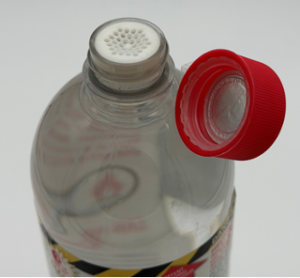
plastic flame arrestor on ethanol fire pit fuel container

Exhibit 36: Flame Arrestor on one of the Exemplary Fuel Containers

The liquid-fuel bottle deserves separate examination from the decorative burner. It can have its own manufacturer, distributor, seller, warnings and safety components. Important fuel-container issues can include:
Detailed fire pit fuel and container design can become particularly important after a suspected flashback or flame-jetting event. The bottle should be preserved even when it looks intact or empty. A seemingly undamaged container may still contain information necessary to reconstruct the accident.

Ethanol, Bioethanol and Isopropyl Alcohol Should Not Be Treated as Identical

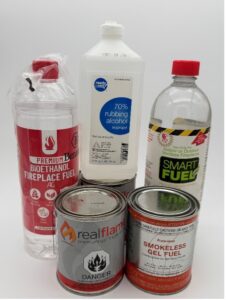
“Alcohol fuel” can describe different formulations. Products marketed for decorative burners may contain ethanol, bioethanol, isopropyl alcohol or mixtures containing alcohol and other ingredients. The actual fuel should be identified from the original container, label, safety information, purchase history and remaining liquid when available.

Exhibit 34: Exemplar Fire Pit Alcohol and Ethanol Fuel Containers

Using a different brand or formulation from the one originally sold with a fire pit can be relevant, but that fact does not automatically establish legal responsibility. Investigators may need to evaluate compatibility, instructions, warnings and the accident sequence. The precise product evidence is more useful than simply labeling every event an “ethanol explosion.”

Warnings Should Be Evaluated with the Actual Product and Transaction

Warnings can become central when an accident occurs during refueling. An investigation may consider what the consumer was told about extinguishment, cooling, refueling and the visibility of an alcohol flame.

Exhibit: 26 Empty Fire Pit box with no instructions or warnings

Relevant issues can include:

A warning that existed somewhere in original product materials is not necessarily the same as a warning that accompanied the product actually received by the consumer. Many used, open-box and resold products sold online through eBay, Facebook Marketplace, or Craigslist, can create additional questions when original packaging or instructions are missing.

CPSC Actions Have Addressed Alcohol-Fueled Fire Pit Hazards

The U.S. Consumer Product Safety Commission has issued broad and product-specific safety actions involving alcohol- and other liquid-burning tabletop fire pits. Current CPSC alcohol fire pit recalls and warnings identify hazards including uncontrolled pool fires and flame jetting. CPSC has taken action involving products sold under multiple brand names and has reported serious and fatal burn injuries.

CPSC has also cited ASTM F3363-19 in its broader alcohol-fire-pit safety alert. That regulatory history can provide useful information about product categories, reported hazards and recognized safety issues. A recall or government warning does not automatically establish civil liability. Likewise, the absence of a recall does not establish that a product was safe.

Health Canada Has Addressed Pourable Alcohol Fuel and Flame Jetting

Health Canada has separately examined portable fire pots and containers of pourable alcohol-based fuel. Its technical analysis describes the relationship among low-visibility alcohol flames, refueling, backward flame propagation and flame jetting. Health Canada has also addressed functional flame-mitigation devices for containers used to pour alcohol-based fuel into portable fire pots.

The Canadian guidance does not determine liability in a U.S. lawsuit. It can nevertheless provide independent government analysis of accident mechanisms and the interaction between the fire pot and fuel container. This distinction is especially useful when determining whether both products require technical examination.

Manufacturers, Fuel Companies and Sellers Can Have Different Roles

An alcohol-fueled fire pit can involve more than one distribution chain.

Potentially relevant companies can include:

The number of companies involved does not determine liability. Each company’s role must be established from the evidence and governing law. Determining online seller and retailer liability may require examination of order records, seller identity, shipping information, warnings in the listing and whether a company imported or privately labeled the product.

Recoverable damages can include:

Preserve Both Products and the Purchase History

A serious refueling case can become difficult to reconstruct if the fire pot is discarded or the fuel bottle is thrown away. Preserve when available:

Proper preservation of fire pit accident evidence can help establish product identity, fuel type, warning information and accident mechanism. Do not refill, ignite or test the products at home to determine whether the accident can be recreated.

Severe Alcohol-Fuel Burns Can Require Years of Treatment

Projected or spilled burning fuel can expose large areas of the body within seconds. The face, hands, arms, chest and other areas can be injured during the same event. Severe and third-degree fire pit burns may require burn-center hospitalization, debridement, skin grafting, donor-site care, rehabilitation and reconstructive procedures.

Permanent consequences can include scars, contractures, disfigurement, altered sensation and restricted movement. Medical photographs, operative reports, graft documentation and therapy records can help establish how the injury developed over time. The seriousness of the injury does not itself establish legal responsibility. Product and accident evidence must independently support the liability analysis.

Damages May Include Long-Term Medical and Personal Losses

A catastrophic alcohol-fire accident can produce losses extending well beyond the original hospitalization.

Depending on the jurisdiction and evidence, damages may include past and future medical expenses, rehabilitation, lost wages or earning capacity, physical pain, impairment, permanent scarring and disfigurement, and other losses recognized by applicable law.

Future treatment can be especially important when burns require staged reconstruction or when contractures and scar problems develop over time. There is no universal settlement value for an alcohol or ethanol fire pit lawsuit. Liability evidence, injury severity, permanent consequences, economic losses, available sources of recovery and governing law all affect the analysis.

An alcohol-fueled fire pit claim may involve two products purchased from different companies: the decorative burner and the fuel container. Ethanol fire pit lawsuit attorneys can investigate both distribution chains, examine warnings and fuel-container safety features, and evaluate whether the evidence supports legal claims for catastrophic burns and permanent injuries.

Questions Families Ask About Alcohol and Ethanol Fire Pit Lawsuits

Does refueling automatically make the consumer responsible?

No. Refueling can be central to the accident, but responsibility depends on the design, extinguishment method, warnings, fuel system, conduct of the parties and applicable law.

What if another person poured the fuel and I was burned?

A bystander may potentially have a claim. Flame jetting or spreading burning fuel can injure people who never handled either product.

Can the fuel company be responsible?

Potentially, depending on the evidence and governing law. The fuel, bottle, dispensing system, warnings and safety components may require separate investigation.

What if the fire pit and fuel were different brands?

That fact should be documented. Different brands can mean separate manufacturers and distribution chains. Compatibility and instructions may also require investigation.

What if the bottle had no flame arrestor?

The bottle and its internal components should be preserved and examined. Whether a particular device was required or legally significant depends on the product, applicable standards, jurisdiction and evidence.

What if the flame looked completely out?

A small alcohol flame can be difficult to perceive under some conditions. The accident should be investigated from the actual circumstances rather than assuming the absence of a visible flame meant no ignition source remained.

Does the product have to be recalled?

No. A recall can provide useful evidence, but it is not required for a potential product-liability claim to be investigated.

Can Amazon, eBay or another online seller be involved?

Potentially. Preserve the seller identity, listing, order history, shipping information and communications so the transaction can be evaluated.

What if the original fuel bottle was discarded?

Preserve photographs, receipts, order histories, packaging and any remaining product information that may identify the fuel.

Connecting the Fuel, Product and Injury Evidence

A serious alcohol-fueled burn claim can require reconstructing the interaction among the fire pot, liquid fuel, fuel container, warnings and people present when the accident occurred. Product records and physical evidence can help determine how the fire developed, while medical evidence documents the resulting injuries and long-term consequences.

David P. Willis — Board Certified Personal Injury Trial Lawyer for Alcohol and Ethanol Fire Pit LawsuitsDavid P. Willis has been Board Certified in Personal Injury Trial Law since 1988 by the Texas Board of Legal Specialization. He has represented seriously injured people and families in catastrophic injury and defective-product litigation for more than 40 years and is licensed in Texas and New York. He formerly served as a Briefing Attorney to Justice Robert M. Campbell of the Supreme Court of Texas.

Cases outside Texas and New York can be handled with qualified affiliated or local counsel when required without increasing the client’s attorney fee. Families investigating catastrophic burns involving liquid-fueled fire pots can evaluate an alcohol fire pit lawsuit with our legal team in a free, confidential consultation.

Get Legal Help Now Before the Evidence Disappears

The fire pot, fuel bottle, packaging and instructions can be discarded during cleanup, while online listings and seller information can change or disappear. Video can be overwritten and witnesses can become harder to locate.

Preserving the physical products, digital purchase history, photographs and witness information early can help determine what happened and identify the companies involved. The products should not be tested, altered, returned or destroyed while evidence-preservation issues are being addressed. Our law firm can assist in tracking down and securing the evidence in your case. Don’t Delay.

Call Us 24/7 at 1-800-447-FIRE

Submit the form below for a Free & Confidential Case Review

Legal Help

GET IN TOUCH

CALL 24/7

GET A FREE CASE REVIEW